The latest updates and insights for health researchers. We share stories from our research partners, best practices, and product updates. Subscribe to the Greenlight newsletter here.
To validate disability coverage and pay benefits, insurance companies typically place the burden of providing medical records on the claimant. However, this time-consuming process delays payments expected from coverage at a time when their policyholder needs it most. Getting the...
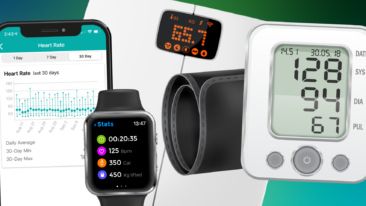
Biometric data is a powerful addition to a study protocol, offering a variety of data about participants’ activity levels and well-being. Pattern has deep experience working with study teams to select the best-fit devices for their studies and integrating…
As the year comes to a close, the Pattern Health team has taken some time to reflect. We are honored to support you, our amazing partners, who are pushing the boundaries of research and developing life-changing therapeutics. This holiday season,...
Pattern’s latest release enables a more streamlined experience for participants, providers, and research teams. The new functionality accommodates all varieties of virtual interactions, from remote eConsent visits to medical appointments.
The Department of Health and Human Services, Office of Inspector General (HHS-OIG) announces new costly fines of up to $1 million per information blocking violation as part of the 21st Century Cures Act. These penalties are specific to health information exchanges,...
With the expanding market of biometric devices, selecting the right tools for research studies can be challenging. In this article, we provide guidance to healthcare researchers on selecting biometric devices, considering factors such as cost, provisioning process, battery life, user experience, device family, accuracy, and reliability.
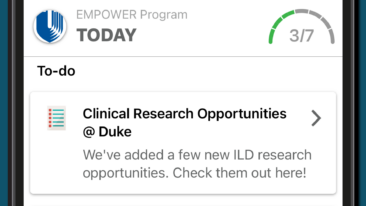
The Duke EMPOWER study team partnered with Pattern to help patients with Interstitial Lung Disease discover relevant clinical trials, access information and exercise plans, track biometrics, and more!
The U.S. Food and Drug Administration (FDA) recently released its long-awaited draft guidance supporting the use of decentralized clinical trials (DCTs) for drugs, biologics, and devices. The new guidance clarifies the FDA's position on DCTs, inspiring confidence in their use...
Electronic Health Information Sharing and Patient Portals Hailed as Data Liberation Day by the government, the Information Blocking Rule (IBR) went into effect on October 6, 2022. This health policy is really about information sharing and empowering the patient to...
Co-Authored by Greenlight Health Data Solutions and Luna The Information Blocking Rule (IBR), now in effect, is a new federal regulation we should all celebrate as a big win for control over our health information, a right that we should...
When Congress prohibited “information blocking” under the 21st Century Cures Act in 2016, it made no reference to patient portals, the websites through which many healthcare providers share clinical information with their patients. Similarly, the word “portal” does not appear once in...
Despite some initial reluctance, physicians have largely gotten used to a federal rule requiring them to share notes electronically with patients, several chief medical information officers told Becker’s. But that doesn’t mean there haven’t been challenges. For instance, a children’s hospital...
Cookies
We serve cookies. If you think that's ok, just click "Accept all". You can also choose what kind of cookies you want by clicking "Settings".
Privacy Policy